
Launch of Centre for the Study of Global Nationalisms (CSGN)
The Department of English, Germanic and Romance Studies at the Faculty of Humanities is proud to announce the launch of a new research centre, aimed at fostering the understanding of new and old nationalisms in Europe and beyond.
Join us for the opening of the new centre.

The Centre for the Study of Global Nationalisms (CSGN) engages critically with the variety of forms, expressions and motivations of national thought and action in the past and present. We explore national ideas, idioms, discourses, literatures, images and media, as well as the political practices and realities which these produce. One of our main concerns is the so-called ”New Right” and their illiberal ideologies, connected movements and lifestyle cultures which are globally on the rise.
Programme
|
13:00-14:00 |
Welcome by Head of Department Lisbeth Verstraete-Hansen. Presentation of the Centre by the coordinators Georg Wink and Jørn Boisen and information on ongoing and planned research projects by associated faculty. |
| 14:00-14:15 | Coffee break |
|
14:15-16:00 |
Focus talk in collaboration with CEMES Orbán's Hungary: The First Autocracy in the EU 'Multiple Nationalist Demographic Panics: Immigration, Emigration and Transborder Nation-building in Hungary'; Szabolcs Pogonyi, Central European University (see abstract and bio below). 'Orbánism goes Global: From Europe's Nightmare to the American Right's Dream', Miklós Sükösd, University of Copenhagen, (see abstract and bio below). Moderation and comments: Vibe Termansen (see bio below). |
| 16:00-16:45 | Reception |
|
16:45-18:00 |
Short film session in collaboration with HUM:Global 'The Other side. A look into the rise of Argentina’s New Right', Elena Bursztein and Axel Rosito, Buenos Aires (See information below) With an introduction by by Aurelio Poles, University of Copenhagen, (see more information below) and a discussion with the film makers. |
Multiple Nationalist Demographic Panics: Immigration, Emigration and Transborder Nation-building in Hungary
Across a growing number of states, demographic change is simultaneously characterized by immigration-driven diversification and emigration-driven depopulation. To borrow Hans Magnus Enzensberger’s metaphor of demographic bulimia, such circumstances produce fears “that too many and too few people could simultaneously exist in the same territory.” In the presentation, I will discuss how the Hungarian government under Prime Minister Orbán uses anti-immigrant politics, transborder nation-building and civilizationist discourse to maintain the myth of an ethnoculturally homogeneous Hungarian nation.
Orbánism goes Global: From Europe's Nightmare to the American Right's Dream
This talk first examines Viktor Orbán's transformation of Hungary through autocratic legalism – systematically dismantling checks and balances while maintaining democratic façades. But what happens in Hungary does not stay in Hungary. Orbán's model has spread beyond Hungary, influencing Central and Eastern European strongmen and becoming the EU's first autocracy. Orbán’s officials have quietly advised American conservatives through the Heritage Foundation and CPAC conferences, exporting Orbánist techniques – media capture, judicial packing, culture-war mobilization – to Trump's second administration. Hungary serves as both laboratory and transmission belt for transnational illiberalism.
Szabolcs Pogonyi
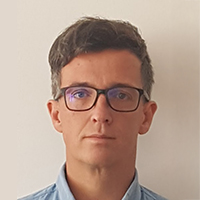 Szabolcs Pogonyi is Associate Professor in the Nationalism Studies Program at Central European University. His current research focuses on diasporic nation building, transborder minorities, non-resident citizenship and external voting. He is the author of several articles in political theory and editor of books in the history of political thought. His research on contemporary Hungarian diaspora politics and transborder nation building '(Extra-Territorial Ethnic Politics, Discourses and Identities in Hungary)' was published by Palgrave Macmillan in 2017.
Miklós Sükösd
 Miklós Sükösd is a Hungarian political scientist, sociologist, and media researcher, and Associate Professor at the Institute of Communication, University of Copenhagen. Educated at Eötvös Loránd University, Columbia University, and Harvard University, he participated in Hungary’s democratic transition and later became an analyst of democratic backsliding, and autocratization and the media. He has (co-)edited or (co-)authored over twenty books, including 'Media, Nationalism and European 'Identities' (CEU Press) and Finding the Right Place on the Map: Central and Eastern European Media Change in a Global Perspective' (Intellect).
 Vibe Termansen
Vibe Termansen is a Danish historian and author with a great interest in Central Europe, especially Poland and Hungary.
Aurelio Poles
Aurelio Poles is a PhD fellow at the Department of English, Germanic and Romance Studies and develops his research on the Far Right in Argentina at CSGN.
Elena Burztein
 Elena Burztein is a feminist, filmmaker, animator, lecturer and researcher at the University of Buenos Aires. Studied Documentary Filmmaking at University of San Martin. Co-director and screenwriter of the feature film "Extraordinary Common People”, "The Unrest” and four short films screened in festivals around the world.
Filmography as director: I still can´t make it (2020, documentary, short film), Maradona (2020, documentary, short film), IT CAN BE DONE (2022, documentary, short film), The unrest (2021, documentary, feature film), 27,610 - The other side (2022, documentary, short film), Extraordinary Common People (2023, documentary, feature film), Panic Show (2025, documentary, short film), I'm Positive (2025, in postproduction, documentary, feature film).
Axel Rosito
 Axel Rosito is a filmmaker, photographer, cinematographer, lecturer and researcher, University of Buenos Aires, Image and Sound Designer. Graduated from the University of Buenos Aires. Co-director and screenwriter of the feature films "Extraordinary Common People", "The Unrest" and five short films screened and awarded in national and international film festivals. National Arts Funds Grantee, Award-winning photographer, Finalist of the 2025 National Visual Arts Salon, Amnesty International Spain photography contest winner.
Filmography as director: Sunset, (2008, fiction, short film - 2008), Pablo and the World Cup, (2011 documentary, short film), The Promise, (2012, fiction, short film - 2012), IT CAN BE DONE, (2022, documentary, short film), 27,610, from the other side, (2022 documentary, short film), The Unrest, (2022, documentary, feature film), Extraordinary common People, (2023, documentary, feature film, 2023), I'm Positive, (2025, documentary, feature film, currently in post production).
Registration
Please register for the event.
Registration deadline is 16 February 2026.
We hope to see you all to the celebration of CSGN!
About the three documentaries
Miley Rally
Documentary, short film, 16 minutes, B/W, WIP

Synopsis: A political outsider recently elected president who considers himself a lion. A "masterclass” in economics in a country mired in poverty. A welcome party organized by himself because he "just wanted to sing”. Who supports him and why? "Panic Show”, dives into the intimacy of an unprecedented act, the self-consecration party of Javier Milei, one of the most controversial figures of the current ultra far-right wing movement worldwide, just a few months after taking office as president of Argentina. A unique show in the world: the first-ever president to sing in his own rock show.
From the other side
Documentary, short film, 10 minutes, B/W, 2022.

Synopsis: On December 29, 2020, in Argentina, debate on Law 27,610 on voluntary interruption of pregnancy is held. On one side of the Plaza del Congreso (Parliament Square), tens of thousands of women held a vigil to claim for our rights. This is a record of the other side. Despite the approval of the law on voluntary termination of pregnancy, thousands of women are still struggling for it to be respected throughout the whole of Argentina.
It can be done
Documentary, 10 minutes, B/W, 2020

Synopsis: With record-high poverty and unemployment rates after four years of right-wing administration, people gather at the obelisk of the city of Buenos Aires to support Mauricio Macri's re-election after his defeat in the primary presidential election of 2019. What do they stand for? Using only our cell phones, we entered the last march in support of the president, only a few weeks after his surprise defeat in the 2019 presidential primary elections. It can be Done is an immediate record of this event, but it also poses a reflection on the rise of right-wing movements around the world and attempts to provide an answer on the reasons that may mobilize their supporters.
Map of South Campus
View directions.
View on map of the Faculty of Humanities - South Campus.
View map of South Campus (pdf).