
Nordic Exceptionalism: Perspectives on a European Periphery (NEPEP)
This research project uncovers the nineteenth-century origins of Nordic exceptionalism by analysing how foreign travellers constructed notions of Nordic Exceptionalism in their accounts. Through mixed-methods analysis, the project examines how these external observations shaped enduring perceptions of Nordic distinctiveness that continue to influence contemporary understandings.
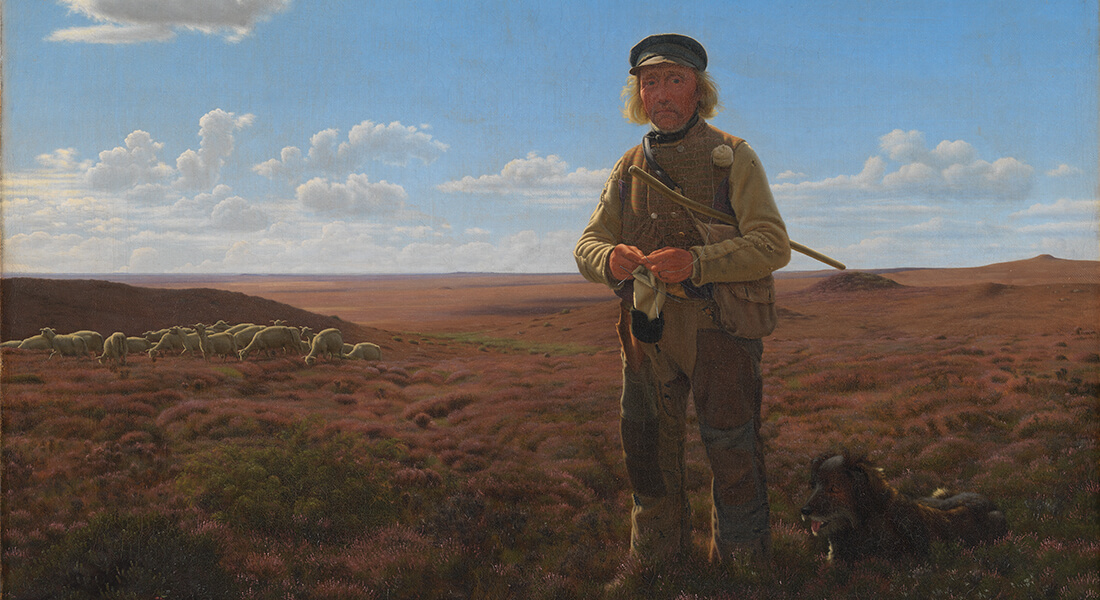
The Nordic countries are widely associated with distinctive social and cultural qualities, and the prevailing belief is that these distinctive features emerged in the twentieth century. The NEPEP project challenges the assumption by exploring how nineteenth-century travel accounts by primarily British and American visitors highlighted egalitarianism, social cohesion, peacefulness, and trust as central concepts they observed.
One part of the research project specifically investigates Anglo-Danish relations during the long nineteenth century, exploring how Denmark’s transition from empire to ‘dwarf state’ shaped a new and emerging identity. We hypothesise that Anglo-American travellers projected ‘exceptionalism’ onto Denmark, partly aided by Danish key figures – such as Grundtvig, Hans Christian Andersen, and Georg Brandes – who actively contributed to the co-creation of these narratives. We will illuminate how these perceptions may have influenced diplomatic relations during key conflicts, including the Napoleonic, Schleswig, and Crimean Wars.
The project analyses a substantial corpus of travel writings from 1790-1900, when the Nordic region was still considered Europe’s periphery. Through both close reading and computer-assisted quantitative analysis, the NEPEP researchers will identify recurring themes, tropes, and ideas that contributed to perceptions of Nordic distinctiveness. Alongside visualising this through text mining tools, we are also working with possibilities of using GIS mapping of travel routes and network analysis of authors’ social connections.
By examining how perceptions evolved and were disseminated to European and global audiences, the project provides historical context to ongoing debates about Nordic identity.
-
Nineteenth-century British and American travel accounts of Denmark, Sweden, Norway, and Iceland
-
Discursive formation of Nordic exceptionalism through external perspectives
-
Historical antecedents of contemporary ideas about Nordic distinctiveness
-
Digital humanities approaches to analysing travel literature
-
What recurring themes, tropes, and ideas did external observers construct about Nordic distinctiveness?
-
To what extent do nineteenth-century external perceptions align with contemporary notions of ‘Nordic exceptionalism’?
-
What social, political, or ideological formations within visitors’ home cultures provided a receptive environment for circulating these notions?
-
To what extent did the external perspectives influence diplomatic relations during key conflicts?
Researchers
| Name | Title | |
|---|---|---|
| Lasse Kræmmer | PhD Fellow |
|
| Robert William Rix | Professor |
|
Funding
Nordic Exceptionalism: Perspectives on a European Periphery (NEPEP) is funded by the Independent Research Fund Denmark.
Project period: 1 June 2025 - 31 August 2028
PI: Robert W. Rix